In 1815, John Doulton invested his life savings of £100 in a small pottery at Vauxhall Walk, Lambeth. Within a century, his name would appear on ceramics displayed in royal households and exported across the globe.
From Lambeth Walk to Royal Warrant
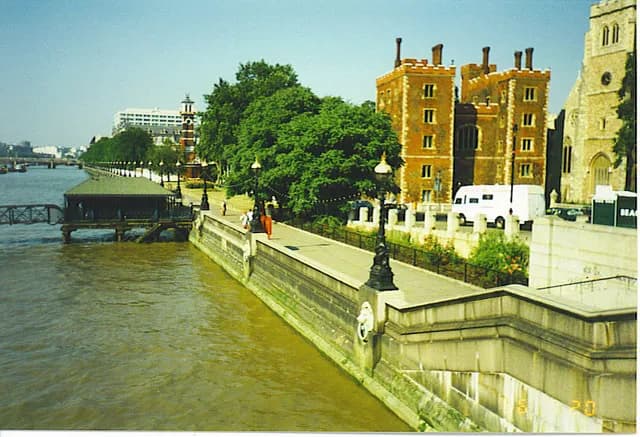
The business began modestly as Jones, Watts & Doulton, a partnership between John Doulton, Martha Jones, and John Watts. Doulton had completed his apprenticeship at Fulham Pottery and was known as one of the finest pot throwers in London. When Jones departed in 1820, the firm became Doulton & Watts. In 1826, the operation moved to larger premises on Lambeth High Street, also known locally as Lambeth Walk, allowing for substantial expansion.
The company became Doulton & Co. in 1854 following the retirement of John Watts. By this time, John Doulton's second son, Henry, had joined the business aged 15 in 1835. Henry Doulton would prove instrumental in transforming the firm from a local pottery into an international ceramics empire.
Sanitary Innovation and Public Health
In 1846, Henry Doulton established pipe works on the Albert Embankment. His innovation of circular ceramic sewage pipes made Doulton the first business to manufacture these on a commercial scale. The timing was significant: London was recovering from cholera outbreaks, and these pipes revolutionised urban sewage disposal. This contribution to public health would later see Henry Doulton knighted in 1887 and awarded the Albert Medal in 1885.
The Marriage of Industry and Art
From 1871, Henry Doulton launched a studio at the Lambeth pottery, deliberately recruiting designers from the nearby Lambeth School of Art. This partnership between factory and art school was unusual for its time. The school, founded in 1854, had already become a crucial training ground for ceramic artists. Henry Doulton joined its board of management in 1863.
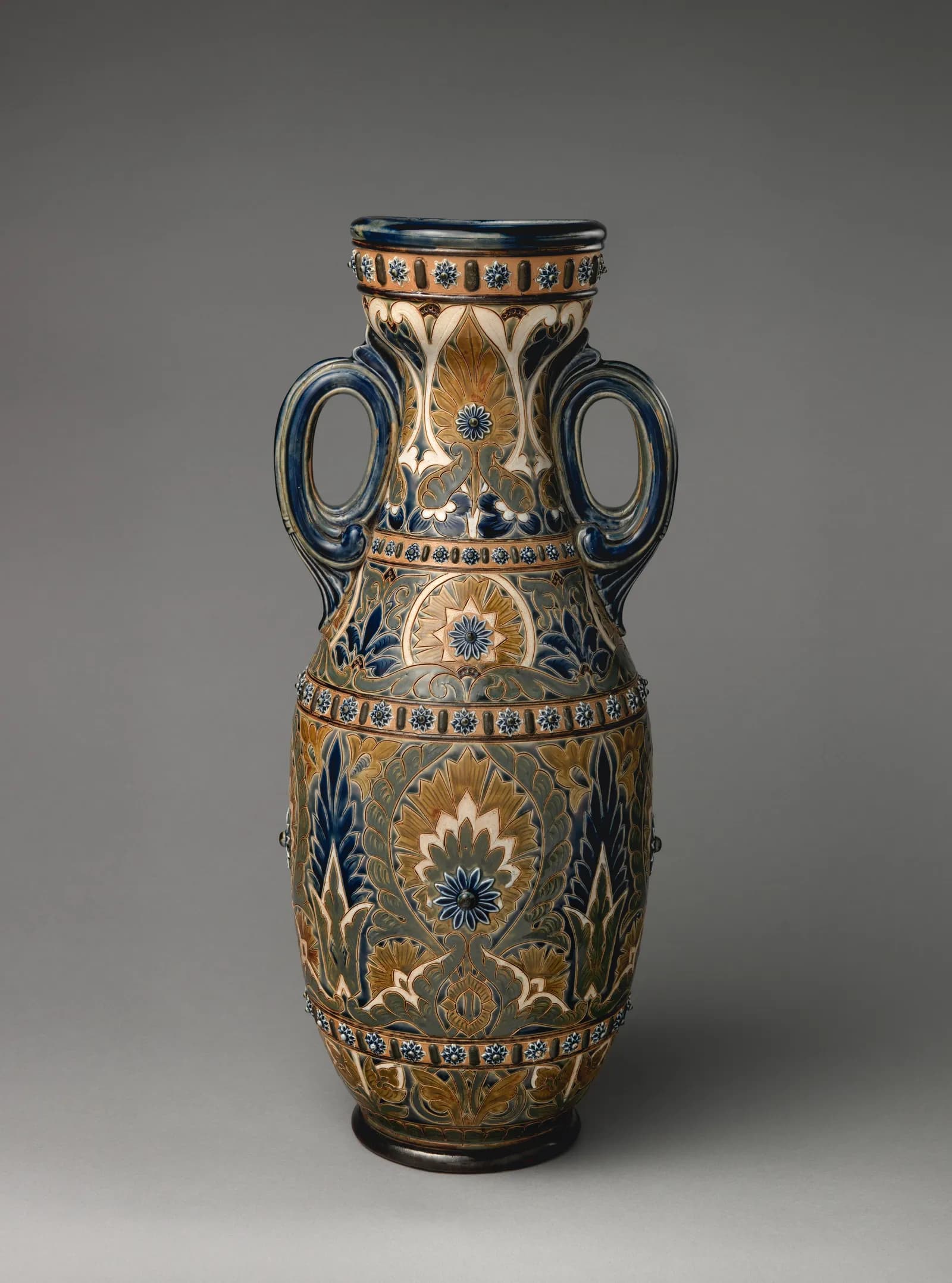
The studio pioneered several ceramic bodies: "Impasto" in 1879, "Silicon" in 1880, "Carrara" and "Marquetrie" in 1887. Doulton became one of the first British makers of art pottery from 1870. Most significantly, the practice of artists signing their work with initials or monograms was highly unusual for the period. Among those whose marks appear on Lambeth ware are George Tinworth, engaged from 1867; Hannah and Florence Barlow; Arthur Barlow; Frank Butler; Mark Marshall; Eliza Simmance; and John Eyre.
The collaboration bore fruit at international exhibitions. Doulton wares won medals at the Paris Exhibition in 1867 and 1878, and at the Centennial Exposition in Philadelphia in 1876. Queen Victoria ordered Doulton ware for Windsor, and the Prince of Wales visited the pottery on multiple occasions. In 1901, the firm received a Royal Warrant, allowing it to adopt the name Royal Doulton.
The Scale of Lambeth Operations
By 1897, the year of Henry Doulton's death, total employment across all Doulton operations exceeded 4,000. The Lambeth works produced not only decorative stoneware but also electrical insulators for railways and the Post Office telegraphic service. Architectural terracotta manufactured at Lambeth was shipped worldwide, adorning buildings from Copenhagen's St Alban's Church to Dunedin Railway Station in New Zealand. Tall Tudor-style chimney pots, Gothic arches, and columns left the Lambeth kilns for destinations across the British Empire.
The firm's utilitarian roots remained: salt-glazed stoneware bottles, jugs, and jars continued to serve inns and pubs. A technique called "Chine" ware impressed fabric onto clay, which burnt away in the kiln to create textured surfaces.
The Lambeth Legacy Today
The Lambeth factory closed in 1956. Clean air regulations prevented the continuation of urban salt glaze production, and work transferred to Staffordshire. The Art Deco headquarters building, designed by T P Bennett, was demolished in 1978. Friezes from this building, including "Pottery through the Ages" by Gilbert Bayes from 1939, were transferred to the Victoria & Albert Museum after intervention by preservationists.
Traces remain for those who know where to look. Southbank House on Black Prince Road survives as a listed building. Its decorative terracotta facade features a frieze of potters at work, and a portrait of Sir Henry Doulton by George Tinworth stands over the entrance. Tinworth himself is commemorated by Tinworth Street in Lambeth.
Henry Doulton's mausoleum in West Norwood Cemetery, constructed from Doulton pottery tiles and bricks, holds Grade II listed status. The Cuming Museum in Southwark holds Tinworth works including "The Jews Making Bricks Under Egyptian Taskmasters." The Museum of Garden History in Lambeth also holds Tinworth pieces.
Henry Doulton donated "The Fountain of Life" terracotta fountain to Kennington Park in 1872, though it has since suffered from vandalism. The White Hart Dock on Albert Embankment, used by Doulton's pottery works to load clay and finished goods for transport to the Port of London, remains as a reminder of the industrial waterway that served the factory.
Lambeth's Broader Ceramics Heritage
Doulton was not Lambeth's only ceramics connection. By 1680, the principal medieval London residence of the Dukes of Norfolk in Lambeth had become a pottery manufacturer producing some of the first English delftware. Later, Farmer and Brindley, a Lambeth-based architectural stone carving and terracotta company, also collaborated with the Lambeth School of Art. John Henry Dearle, chief designer for William Morris & Co., taught at the Lambeth School of Art during the 1880s.
Today, the art school continues as the City and Guilds of London Art School, maintaining its connection to fine craft. While the factory smoke no longer rises over Lambeth Walk, the Doulton dynasty's contribution to British ceramics remains visible in museum collections, listed buildings, and street names across the borough.